
How Tenebris Somnia FMV works: the Argentine film crew, practical effects, and pixel-to-film storytelling.
Tenebris Somnia FMV Cinematics Guide
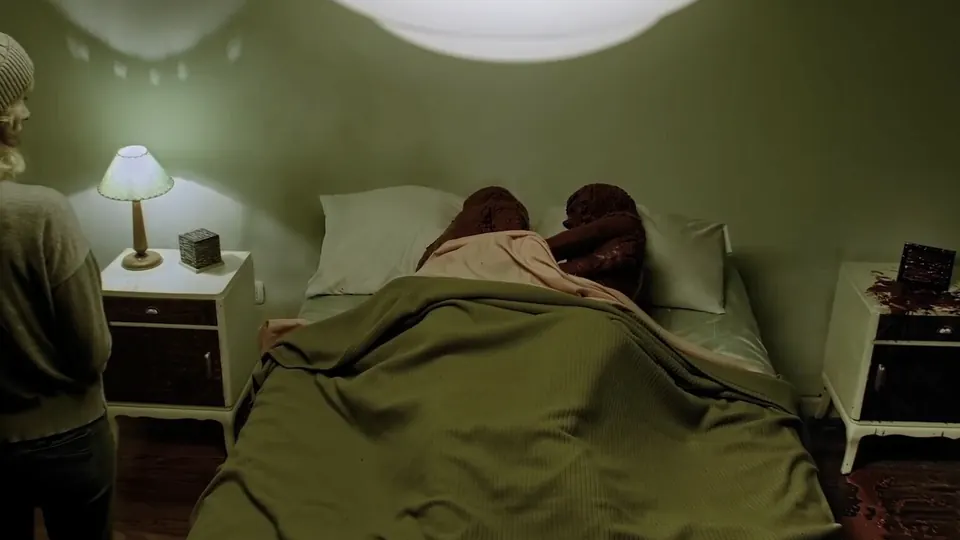
Tenebris Somnia alternates 8-bit pixel exploration with live action FMV cutscenes shot with real actors and practical effects by an award winning Argentine film crew. The developers state outright that the secrets of the game lie within its cinematics, making the films required viewing rather than optional flavor.
- Pixel art handles exploration, FMV handles revelation at key story points.
- Real actors, costumes, and practical effects, with no AI generation involved.
- Never skip first viewings, since films carry clues the pixel layer withholds.
The Two Layer System
The design is simple to describe and strange to experience. You explore in chunky retro pixels reminiscent of the NES and Famicom era, then at key moments the game cuts to a completely different point of view: live action footage of the same events, performed by actors in full creature makeup. The pixel layer suggests, the film layer shows, and your imagination permanently upgrades every sprite afterward.
| Layer | Visual style | Narrative job |
|---|---|---|
| Exploration | 8-bit and 16-bit pixel art | Puzzles, combat, navigation |
| Cinematics | Live action with practical effects | Reveals, shocks, secret keeping |
Official source: Tenebris Somnia on Steam
PC Gamer describes the psychological payoff precisely: after the film shows the two-faced monster true form, your mind projects it onto every later pixel encounter. Story foundations for these scenes live in Tenebris Somnia Story and Characters.
The Crew Behind the Camera
The films are directed by Andres Borghi, the game co-creator who is himself an Argentine filmmaker and visual effects artist. Every official listing describes the unit as a professional and award winning film crew from Argentina working with real actors and practical effects rather than digital shortcuts. Publisher New Blood Interactive backs the production, with FAITH creator Mason Smith executive producing the game overall.
When trailer viewers questioned whether AI generation had touched the suspiciously polished cutscenes, New Blood CEO Dave Oshry personally denied it on the Steam forums with emphasis. That exchange is worth remembering: the creature work is makeup, costume, lighting, and direction, which is exactly why it reads as physical and heavy on screen.
Publisher leadership publicly denied any AI generation in the cinematics. Expect latex, lighting, and stagecraft in the tradition of classic horror cinema.
Developer background continues on the developer facts page, and release context sits in the Gematsu launch report.
Practical Effects and Creature Design
Trailer and demo creatures show the crew range. The two-faced woman pairs a deformed double visage with elongated limbs and bloated features. A candle headed figure carries lit tapers from its skull. Flying white masked things bare gigantic teeth. A round suited figure vomits on camera. Each design works twice: readable as a pixel silhouette first, then horrifying in full practical effects closeup.
The 80 level industry piece on the announcement notes how the same creature appears in the pixel world one moment and the real world the next, deliberately blurring which layer is more truthful. 80.lv coverage frames that blur as the central aesthetic gamble. Monster identification continues in the enemies guide and combat tactics in Tenebris Somnia Combat Guide.
Pause mentally on faces, wounds, props, and symbols during FMV. Practical effects shots hide puzzle foreshadowing in set dressing that the pixel layer later echoes.
When Cutscenes Trigger
Trigger placement follows adventure game logic rather than a fixed timer. Demo evidence and previews point to these trigger families:
| Trigger family | Example from demo coverage | Player action |
|---|---|---|
| First contact | Meeting the two-faced monster | Explore until the encounter fires |
| Puzzle payoff | Brewing the door mixture | Complete the reagent chain |
| Threshold crossing | Opening the sulfur marked door | Push the main path forward |
| Discovery beats | Finding ruined film materials | Examine key story objects |
Nothing suggests the films are collectible or optional. Reaching key points plays them automatically, and the demo spaces them as act punctuation. If a session feels quiet for a long stretch, push the main objective instead of grinding side rooms. The playable trigger route is mapped in Tenebris Somnia Demo Walkthrough.
How to Watch for Maximum Effect
Watch every film once without distractions, preferably with headphones and subtitles on. The sparse sound design praised in previews means whispers and distorted lines carry plot weight, and the confirmed subtitle languages cover English, both Spanish variants, Japanese, and Brazilian Portuguese. Dim the room if you can, since the films trade in shadow detail that washes out under glare.
On repeat playthroughs, rewatch with an analyst eye. Note which pixel sprites got film reveals and which did not, because unrevealed designs are candidates for full game shocks. Track recurring props across films: candles, mirrors, blood patterns, film equipment. Motif logging is the closest thing this game has to a detective notebook, and it pays off in puzzle rooms later.
Official source: Tenebris Somnia on New Blood
FMV History and Why This Matters
Full motion video carries decades of baggage, from 1990s cheese like The 7th Guest to the modern renaissance through Her Story and the Alan Wake series. Tenebris Somnia sidesteps the kitsch trap by refusing to blend the layers. The seam between pixels and film is intentionally jarring, and previews argue the jolt itself builds dread: safety lives in the cartoon world, terror lives on film, and every trigger drags you across.
That visible seam also protects the budget. Pixel exploration is cheap to build dense, film money concentrates into short high impact bursts. For players, the takeaway is trust: when the screen cuts to film, the developers are spending their most expensive resource, so the content is guaranteed important.
FAQ
Are the cutscenes skippable? Assume standard skipping on replays, but first viewings should never be skipped. The films carry story secrets by developer statement.
Were the FMV scenes made with AI? No. Publisher leadership publicly denied AI generation, crediting the Argentine crew practical effects and direction.
How long are the FMV sequences? Individual runtimes are unconfirmed. Demo films run short by design, closer to shocks than chapters.
Who directs the films? Andres Borghi, the game co-creator and Argentine filmmaker, directs the live action unit.
Do the films contain story spoilers for puzzles? They contain foreshadowing rather than solutions. Watch for motifs that echo later in pixel rooms.
Will the full game have more FMV than the demo? Almost certainly, given the films carry the plot secrets, but the count and total runtime are unconfirmed until the October 16, 2026 launch.
Related Guides
- Tenebris Somnia Story and Characters
- Tenebris Somnia Demo Walkthrough
- Tenebris Somnia Beginner's Guide
- Tenebris Somnia FAQ
Each link above completes the picture: plot, playable route, onboarding, and rapid answers.
More Tenebris Somnia Guides
Free Tenebris Somnia demo on Steam, Xbox, and GOG: what it covers, how long it takes, and what the full October 16 game adds.
Complete Tenebris Somnia demo walkthrough: apartment arrival, chemical puzzle, monster fights, and FMV beats.
Who made Tenebris Somnia? Andres Borghi, Saibot Studios, New Blood Interactive, and the award-winning Argentine FMV crew facts.
Tenebris Somnia difficulty: no modes announced yet, so this guide covers demo challenge facts and launch prep.
Tenebris Somnia endings: no ending count is confirmed yet, so this guide covers the story setup and post-launch unlock plan.
All Tenebris Somnia enemies confirmed so far: the two-faced monster, Desiderium creatures, and cult foes, plus combat prep.
Tenebris Somnia exploration guide: Ivan's apartment, the Desiderium, room-clearing routes, and secrets for the demo and launch.
Tenebris Somnia FAQ: release date, platforms, demo, price, story, and system requirements answered.